1. Introduction: Stargazing Through a British Lens
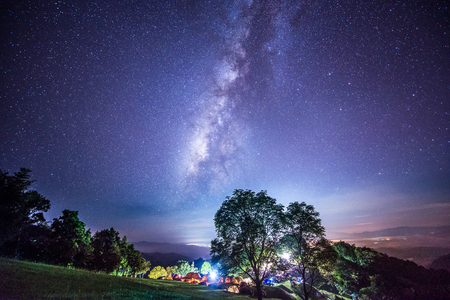
When you look up at the night sky from anywhere in Britain, you’re not just seeing distant balls of burning gas; you’re peering into a living tapestry woven from centuries of myth, storytelling, and local belief. The British Isles, with their windswept moors, ancient stone circles, and deep-rooted folklore, have long imbued the constellations above with tales that reflect both the land and its people. Here, stargazing isn’t only about navigation or scientific curiosity—it’s an act deeply entwined with cultural identity. Across generations, Britons have looked to Orion’s Belt or the Plough not just as celestial markers, but as figures of legend, omens for harvests, or even guides for lost souls on foggy nights. This melding of observation and imagination has ensured that the stars are never silent; they whisper stories shaped by local landscape, history, and weather. To understand the night sky in Britain is to appreciate how myths—passed down in pubs, around hearths, and under open skies—have enriched our understanding of constellations and given them a distinctly British flavour.
Celtic Star Lore: Ancient Roots in the Skies
Long before Roman or Saxon influences swept across Britain, the ancient Celts and Druids gazed up at the night sky and wove powerful stories around its shifting tapestry. The Celts, renowned for their deep connection to nature and spiritual landscapes, saw the heavens as a living map—where constellations were not just patterns of light but guiding spirits, omens, and even deities. British interpretations of celestial phenomena owe much to these early mythologies, embedding layers of meaning into the stars that continue to echo through local folklore.
The Druidic Approach to Astronomy
Druids, the priestly class among the Celts, served as both astronomers and storytellers. Their profound understanding of lunar cycles and solstices informed seasonal rituals and agricultural practices. Rather than seeing constellations as fixed Greek heroes or monsters, Druids interpreted them as shifting symbols tied directly to earthly concerns—fertility, harvests, and protection from harm.
Key Celtic Constellation Interpretations
| Modern Constellation | Celtic Interpretation | Associated Folklore |
|---|---|---|
| Orion | The Giant’s Hunter | Linked to Finn MacCool, a legendary warrior who hunted across the skies each winter |
| Pleiades | The Seven Sisters of Arianrhod | Connected with rebirth and fate; believed to guide souls through the Otherworld |
| Ursa Major (The Plough) | The Wagon or Chariot of the Gods | Seen as a celestial vehicle for transporting souls during Samhain |
Celtic Festivals Aligned with Celestial Events
The alignment of certain star clusters with key points in the agricultural calendar was no coincidence. The festival of Beltane in May coincided with the rising of specific stars, while Samhain marked the thinning veil between worlds as Orion climbed higher in the night sky. These astronomical markers were used by Druids not only for timekeeping but also to reinforce communal bonds and transmit oral tradition.
Lasting Influence on British Night Sky Folklore
Even today, echoes of Celtic star lore persist in rural customs and local legends throughout Britain. From Cornish tales of spectral hunters riding Orion’s Belt to Scottish beliefs about fairy hosts travelling on starlit nights, these ancient myths have shaped how communities interpret celestial phenomena. By grounding their stories in both observation and imagination, the Celts left a resilient legacy—one where every twinkling light above is a thread connecting earthbound lives to timeless cosmic cycles.
3. Arthurian Legends Written Among the Stars
Within the rolling hills and ancient woodlands of Britain, the tales of King Arthur and his knights have never truly faded. In fact, many communities across England, Wales, and Cornwall claim their own starlit connections to the legendary monarch. It’s not just in weathered manuscripts that these myths endure; they are mapped out above us, woven into the very fabric of the night sky. For centuries, storytellers have pointed to constellations like Orion and Cygnus, likening their shapes to Arthur’s sword Excalibur or the fabled Round Table. Local folklore in Somerset holds that the Sword of Orion marks Arthur’s blade, forever raised against darkness. Meanwhile, certain star clusters near the constellation Cassiopeia are linked by Cornish tradition to Merlin’s magic—his spirit said to roam among the shifting stars, guiding worthy seekers even now.
These celestial associations were more than fanciful tales. Shepherds and sailors alike used these stories as memory aids for navigation and timekeeping on long, perilous journeys across moorland or sea. The legend that Camelot rises each spring with the reappearance of specific stars in Taurus lent a practical rhythm to rural life, aligning seasonal tasks with mythic cycles. Even today, village fairs and nighttime gatherings revive these traditions, keeping alive both a sense of wonder and a uniquely British way of reading meaning in the heavens.
4. Mysteries of the Plough and the Wain
Among the most recognisable features of the British night sky is a constellation known across the Isles by a host of evocative names. While astronomers worldwide refer to it as Ursa Major, or The Great Bear, Britons have their own cherished terms—most famously, The Plough and Charles’s Wain. These local monikers are more than just quaint alternatives; they are deeply woven into folklore, rural life, and the very language of stargazing in Britain.
Regional Nicknames and Their Origins
| Region | Common Name | Folkloric Significance |
|---|---|---|
| England (general) | The Plough | Linked to agricultural cycles and the coming of spring |
| Northern England & Scotland | Charlie’s Wain / Charles’s Wagon | Believed to be King Charles’s cart, forever rolling across the heavens |
| Cornwall | The Seven Stars | Associated with seafaring luck and navigation by fishermen |
| Wales | Y Sosban (The Saucepan) | A common kitchen tool—making constellations feel close to home |
| Orkney & Shetland Isles | The Butcher’s Cleaver / The Great Carle’s Cart | Tied to Norse heritage and tales of giants roaming the skies |
The Plough: Guiding Hand for Generations
No other constellation in Britain has enjoyed such everyday utility as The Plough. Farmers relied on its rising and setting to mark seasons; shepherds referenced its orientation at dusk to predict weather; mariners used it as a celestial compass. In times before clocks, The Plough was, quite literally, a timekeeper for those who worked the land or sea.
The Legend of Charles’s Wain
The name Charles’s Wain—wain being an old word for wagon—has its roots in medieval tales. One enduring story holds that this grand cart belonged to King Charles the Great, cursed to circle endlessly above earth. Some folk believed seeing “Charlie’s Wain” low on the horizon foretold misfortune or war, while others took comfort in its steadfast journey through the night.
The Great Bear Beyond Borders
While British stories focus on wagons and ploughs, echoes of Ursa Major’s significance ripple across Europe. Yet it is in Britain that these nicknames persist with practical warmth—a reflection of people who found meaning in familiar shapes above, blending myth with the rhythms of rural life. The mysteries of The Plough and Charles’s Wain remain not just relics of ancient nights, but living legends pointing north for all who gaze upward.
5. The Pleiades: From Seven Sisters to Lost Maidens
If you’ve ever gazed up at the frosty winter sky in the British countryside, chances are you’ve caught sight of the Pleiades – a star cluster that twinkles with mythic resonance. Known to astronomers as Messier 45, but far better loved as ‘The Seven Sisters’, this group of stars is woven deep into the fabric of local British folklore. Yet, our stories diverge subtly from those told on the continent.
The British Tale: The Lost Maidens
In British legend, the Pleiades are often thought of as lost or wandering maidens. Tales from rural England suggest these stars represent a band of sisters who became separated from their kin while travelling across moors and forests, eternally searching for a path home. Some Cornish fishermen believed spotting the Seven Sisters before dawn was a sign to postpone their journey—a warning from the maidens themselves, guiding those still earthbound.
Contrast with European Lore
While the notion of seven starry sisters appears across Europe, British versions possess a melancholic edge. In Greek mythology, for example, the Pleiades are pursued by Orion, transformed into stars to escape his advances. In contrast, British tales focus less on pursuit and more on loss—emphasising the separation and perpetual yearning of the maidens. Scottish traditions even whisper that one sister is missing altogether, echoing how sometimes only six stars are visible to the naked eye. This absence becomes a metaphor for longing and things irretrievably lost—a theme that resonates through Britain’s mist-laden hills and haunting ballads.
A Living Legend
Even today, these stories serve as reminders of both cosmic wonder and cultural identity. When the first frosts set in and the Pleiades rise high above hedgerows and church spires, Britons still look up—and remember those who wander just out of reach among the stars.
6. Ghosts, Omens, and Shooting Stars
The British countryside is steeped in a shadowy web of tales that transform the night sky into a theatre of supernatural happenings. For centuries, meteors and comets have been regarded with suspicion or awe—never mere astronomical events, but rather omens or messengers from beyond. In remote villages of Yorkshire and Cornwall, elders once swore that a sudden streak of light across the heavens was the restless soul of the recently departed, racing towards the afterlife or returning for unfinished business. These phantom lights—so-called “ghost candles”—were seen as both warnings and invitations to pay respect to those lost.
Meteors as Harbingers
Across the moors and dales, shooting stars were rarely viewed as random; instead, their appearances often foretold significant events. A meteor shower might presage the birth of a child destined for greatness—or herald a coming misfortune. In some rural communities, it was customary to avert one’s gaze when a meteor passed overhead, believing that direct eye contact would bring bad luck upon the watcher’s household. Others whispered that if you made a wish as you glimpsed a falling star, it would be granted—but only if your heart was pure and your intentions noble.
Comets: Doom or Deliverance?
Comets, with their blazing tails lingering in the sky for nights on end, carried even heavier symbolic weight. During the appearance of Halley’s Comet in 1066, chronicles from Kent to Northumbria described it as “the harbinger of doom,” coinciding with invasions and upheaval. Yet not all comet lore was sombre; some believed these celestial visitors swept away evil spirits and cleansed the land ahead of new beginnings. The duality of hope and fear woven into these beliefs reflects the British knack for finding meaning in mystery.
Customs Rooted in Superstition
Even today, echoes of these traditions persist. On chilly autumn nights, families gather on village greens to share old stories—reminders not just of cosmic spectacle but also communal resilience. Children are taught to recite protective rhymes when seeing shooting stars: “Star light, star bright / Keep my family safe tonight.” Such customs blend ancient superstition with local warmth, ensuring that each flash across the night sky remains wrapped in legend.
7. Folklore Under the Modern Sky
In present-day Britain, the ancient myths and local legends tied to the night sky continue to resonate beneath both urban glow and rural darkness. Traditional stories of figures like Orion the Hunter or the spectral White Lady are far from forgotten; instead, they have found new life at public stargazing events, planetarium shows, and community festivals. Across the UK, locations such as Kielder Observatory in Northumberland or Galloway Forest Park in Scotland regularly host storytelling nights where professional astronomers and local historians blend hard science with rich folklore. These gatherings invite audiences to see not just constellations, but also the tales woven into their shapes by ancestors centuries ago. Schools integrate these legends into their curriculum, using them as entry points for teaching astronomy and British heritage side by side. Meanwhile, amateur astronomy clubs often reference these old myths during night walks or celestial navigation workshops, grounding modern techniques in a sense of place and history. Even city dwellers—those under the haze of artificial light—participate through digital apps and online streams that incorporate traditional tales into virtual star maps. This fusion ensures that while our understanding of the cosmos becomes more sophisticated, the echoes of folklore still guide our eyes upward. The enduring presence of these stories in contemporary stargazing culture keeps the old myths alive, not as relics but as living threads binding past and present. In doing so, they remind us that every glance at the night sky is both an act of wonder and a nod to Britain’s storied imagination.